

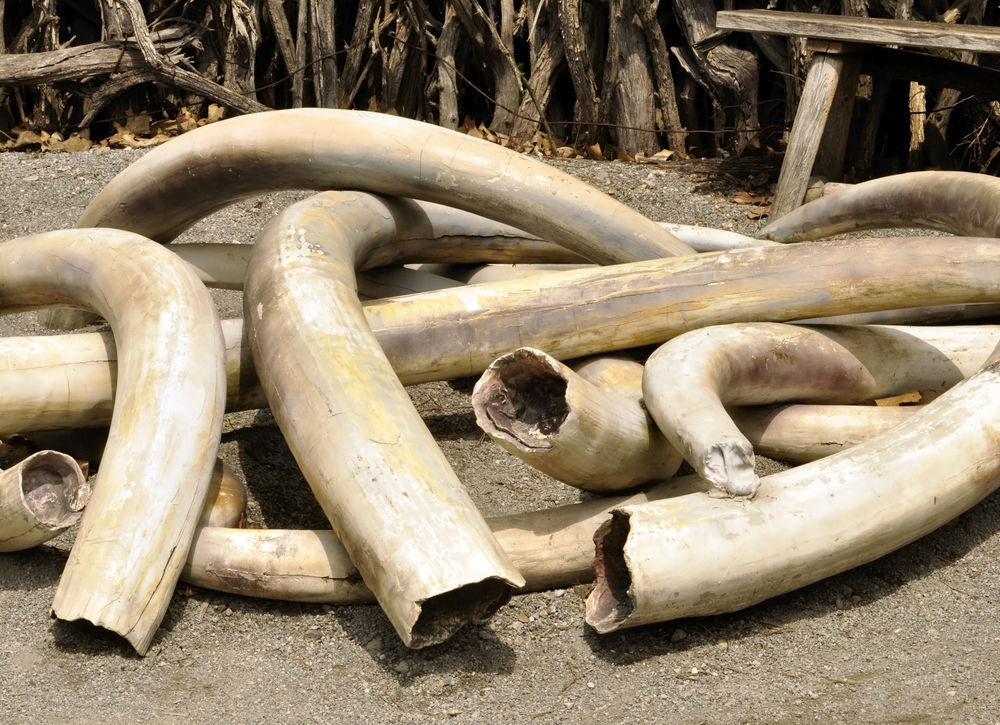
A joint operation by the Special Wildlife Crime Unit and the Uganda Police Force has led to the arrest of a suspected ivory trafficker and the recovery of 154 kilograms of raw elephant ivory in Northern Uganda.
The suspect, Francis Opiro, was apprehended on February 22, 2026, in Nwoya District while in possession of ten pieces of raw elephant tusks.
Authorities confirmed that he will be arraigned before the Standards, Utilities and Wildlife Court to face charges of unlawful possession of protected wildlife specimens, contrary to the Uganda Wildlife Act Cap 315.
Commenting on the operation, Dr James Musinguzi, executive director of the Uganda Wildlife Authority (UWA), reaffirmed Uganda’s firm stance against wildlife crime.
“This seizure sends a clear and firm message that Uganda will not tolerate wildlife crime,” Dr Musinguzi said.
“Ivory trafficking is a serious offense that threatens our elephant populations, undermines conservation gains, and fuels organized criminal networks operating across borders.”
He emphasized that the operation was intelligence-led and reflected strong collaboration between UWA and national security agencies.
Enforcement efforts have been intensified across the country, particularly in Northern Uganda, which traffickers have previously exploited as a transit route for illegal ivory.
“Our enforcement presence is stronger than ever,” he warned. “Anyone involved in wildlife trafficking should know that arrest, prosecution, and stiff penalties are inevitable.”
The arrest highlights the persistent threat ivory trafficking poses to Uganda’s elephant populations and broader biodiversity.
Wildlife crime not only endangers protected species but also undermines national security, tourism revenues, and the livelihoods of communities that depend on conservation.
The Uganda Wildlife Authority reiterated its commitment to dismantling wildlife trafficking networks at all levels and called on the public to support conservation efforts by reporting suspicious activities.
Authorities stressed that protecting Uganda’s wildlife heritage remains a top priority to ensure that future generations continue to benefit from the country’s rich natural resources.
